
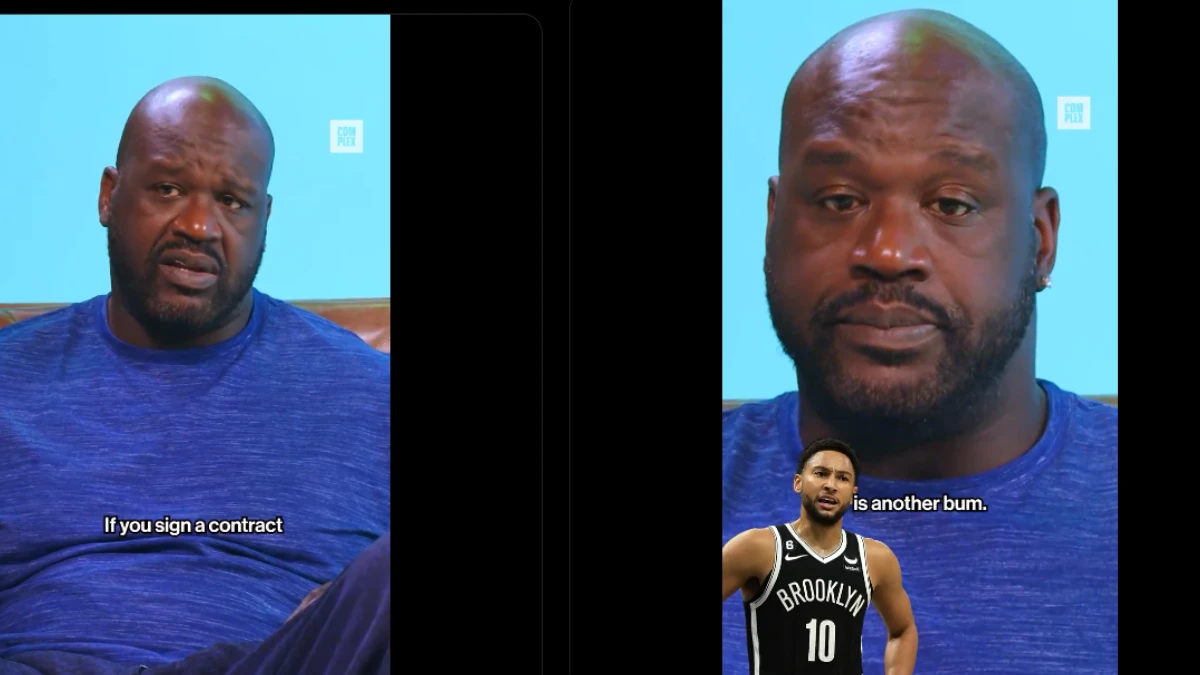
Basketball fans and analysts have debated for decades: Would modern NBA centers really stand a chance against the thunderous power and relentless force of Shaquille O’Neal? Recent interviews and candid commentary from Shaq himself have reignited this fiery topic, with the Hall-of-Famer claiming that today’s big men “couldn’t guard him” if he were dropped into the 2025 NBA. While the debate feels like pure hypothetical fun, the reasons go much deeper than size alone—and the answers reveal fascinating truths about how basketball’s evolution has changed the very soul of the center position.
The Anatomy of Shaq’s Dominance — Size, Skill, and Mind Games
Shaquille O’Neal wasn’t merely big; he redefined what big meant on an NBA court. Standing over seven feet tall, weighing upwards of 325 pounds in his prime, Shaq fused brute strength with remarkable agility. Defenders struggled not just with his mass but with his balance, quick feet, and soft touch around the rim. Coaches tried everything: double teams, fronting him on the block, bringing help off shooters—all to little effect.
The Paint Was His Kingdom
Shaq’s ability to seal defenders and create space led to unstoppable “deep paint” touches. One step, a bump, and he was dunking, putting fear into defenders who risked fouling out or injury.
His soft hands made him an underrated passer. Collapsing defenses meant teammates got easy buckets—fueling Lakers championship runs in the early 2000s.
Mentally, Shaq’s trash talk and antics got into the heads of opponents: the psychological game counted as much as raw power.
Why Traditional Centers Struggled
Classic bigs—think Tim Duncan, Patrick Ewing, David Robinson—had skill, but few could match Shaq’s combination of torque and touch. Even Hall-of-Fame defenders were routinely punished beneath the rim.
The Rise of the “Stretch Five” — Modern Bigs: Skilled, Spaced Out, and Lighter
The NBA’s stylistic transformation, with increased pace and the three-point revolution, shifted the center position forever.
Modern stars like Nikola Jokic, Victor Wembanyama, and Chet Holmgren are versatile shooters, playmakers, and transition threats. They space the floor, pull defenders to the perimeter, and run pick-and-pop sets, which limits paint congestion but exposes limitations in one-on-one post defense.
Many modern bigs are no longer 300-pound brutes; they weigh closer to 220–250 pounds. The advantage is quickness but at the cost of interior power.
Shaq’s Own Perspective on The Shift
Shaquille O’Neal often jokes that “today’s big men would have no idea how to handle me.” He admits the game is changing, respecting the evolution but calling out what he sees as softness. In his words: “Us older big guys look at it as soft because guys don’t want to get down there and bang. That’s okay, it’s a new era, new generation. I can’t tell them how to play.”
Shaq vs. Modern Centers — Would His Dominance Translate?
To test this scenario, break down key factors:
Size and Strength in Hypothetical Matchups
Victor Wembanyama (7’4”): Tall, athletic, blocks shots, but weighs nearly 100 pounds less than Shaq. How would he defend Shaq’s bump-and-spin?
Nikola Jokic: Crafty, physically solid for today’s standards, but still yields 50+ pounds to Shaq’s peak form. Can he hold ground when Shaq seals in the paint?
Chet Holmgren: Mobile, skilled, but slender. Would have to rely on help defense constantly.
Shaq famously said he would “make Wembanyama and Holmgren quit the game,” a nod to both their lighter frames and the physical toll of his style.
The Evolution of Defense — Could Modern Schemes Slow Shaq?
Modern NBA defenses use more zone, switch everything, and double-team early—tactics designed to limit dominant post scorers. Shaq acknowledges defenders would swarm him more, but counters that “when you send help, I’ll find open shooters every time.” In his view, modern spacing helps him by forcing teams to choose between one-on-one coverage and leaving shooters open.
Three Fresh Insights You Won’t Find Elsewhere
1. The “Hidden Challenge”—Stretch Bigs Who Troubled Shaq
Shaq admits that it wasn’t always the star defenders who bothered him. Players with mid-range or long-range shots, like the lesser-known Bryant Reeves or Rik Smits, often forced Shaq out of his comfort zone. These early stretch bigs could “pop” out 15 feet, and Shaq had to chase—opening paint for others. This insight highlights that spacing is not new, but modern centers use it to maximum effect now.
2. The Analytics Angle — Efficiency Wars
Shaq shot nearly 60% from the field; most modern bigs hover around 35–37% from three, giving them higher points-per-shot but exposing them to offensive lulls. Teams now chase “expected value” rather than brute force, but Shaq argues playoff games become “half-court slugfests,” where physical dominance still reigns. Advanced stats show that paint scoring remains the most efficient shot, even as three-point usage rises.
3. Endurance and Fouls in the Modern Era
The NBA’s pace has ramped up, with bigs expected to run end-to-end constantly. Would Shaq be gassed by today’s tempo? His own take is that he was always in shape for 40+ minutes in high-intensity Finals. Modern bigs, he argues, get into foul trouble quicker defending physical post-up play, reducing their impact. Fouls, fatigue, and technicals would be their greatest enemies guarding him.
Era Debate — The Hybrid Big Man Question
Comparisons with Nikola Jokic, the “modern Shaq,” are now routine. Jokic dominates through finesse, vision, and perimeter play, while Shaq ruled the paint with intimidation. Former teammate Derek Fisher says both are “unicorns”—unstoppable in unique ways, but the spotlight reflects a shift in the definition of what a center should be. Teams build their offenses differently, but each player distorts defenses in ways nobody else can.
Societal and Strategic Changes — Off-Court Factors Impacting the Era Debate
Media coverage has amplified the differences, with social media giving current stars both greater scrutiny and fan-driven legend-building. Shaq’s stories and meme-worthy interviews continue to fuel nostalgia for his era.
Strategy has evolved: analytics drive roster decisions and coaching, making it harder for “one-way” big men to survive in rotations. But top teams like the Nuggets still rely on interior presence for championships.
FAQ — Deep-Dive Into Shaq’s Dominance and Modern Center Challenges
Q1: Why does Shaquille O’Neal say no big man could guard him today?
Shaq points to the lighter frames and perimeter-first game of modern bigs, arguing they lack the experience and physical strength to withstand his post play.
Q2: Did Shaq struggle against stretch bigs in his own era?
He admits players with shooting range, like Bryant Reeves and Rik Smits, caused problems by pulling him out of the paint.
Q3: Would Shaq dominate today’s NBA as much as he did in the 2000s?
Most analysts agree he’d still be a top-5 player, but style changes mean defenses would scheme to slow him with early doubles, zone, and forcing him to defend pick-and-pops.
Q4: Would Shaq’s lack of shooting hurt him in today’s NBA?
Maybe in regular season pace, but in playoffs he’d force teams to adjust, leveraging his passing and gravity inside.
Q5: Which modern bigs have the best chance of handling Shaq?
Nikola Jokic’s strength and IQ make him the best candidate, though Shaq would still have the edge physically.

Sam, a dedicated blogger, has immersed himself in the world of content creation for the past five years. His journey reflects a profound passion for storytelling and insightful commentary. Beyond the digital realm, Sam is a devoted NBA enthusiast, seamlessly blending his love for sports with his writing pursuits.