
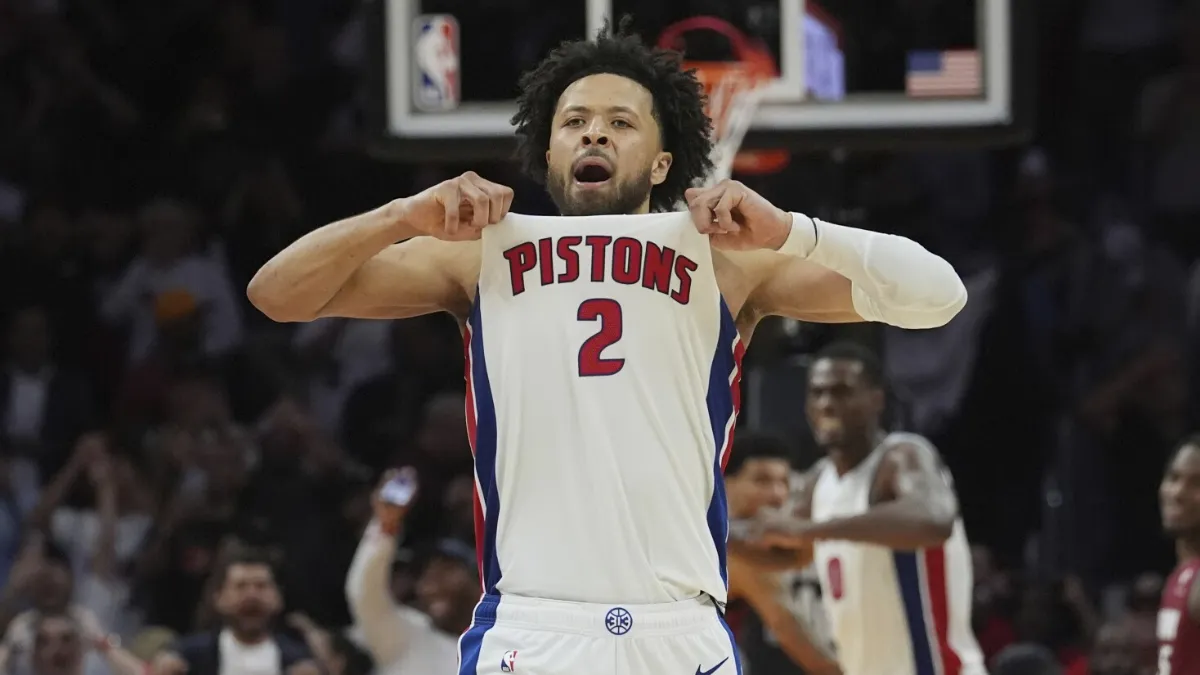
When Volume Meets Victory: Cade Cunningham’s Historic 46-Point Triple-Double Redefines Efficiency in the Pistons’ OT Win
Basketball, at its core, is a blend of precision, athleticism, and decision-making—a truth that was both stretched and spotlighted in Cade Cunningham’s astonishing 46-point barrage powered by an NBA season-high 45 field goal attempts. Detroit’s overtime victory over the Washington Wizards on Monday wasn’t just a statistical footnote; it was a spectacle that reignited debates about volume scoring, team leadership, and the evolution of the triple-double in the modern game.
Context and Game Recap — More Than Just a Scorer’s Night
At the Little Caesars Arena, Cunningham didn’t just take over the scoreboard. He dictated tempo, chased rebounds, created for teammates, and pilfered the ball from the opposition. His final stat line:
46 points
45 field goal attempts (NBA season-high)
12 rebounds
11 assists
5 steals
16-for-18 on free throws
2-for-11 on three-pointers
Cunningham’s landmark performance turned the tide for Detroit, now 9-2 and atop the Eastern Conference, while simultaneously sending the Wizards into a tailspin: their ninth consecutive loss (now 1-10). Fellow Pistons Daniss Jenkins (24 points, game-tying three to force OT), Jalen Duren (19 points, 14 rebounds), and Duncan Robinson (game-winning OT three) each elevated their games at key junctures.
Washington’s CJ McCollum nearly matched star-for-star, pouring in a season-high 42 points, but ultimately faltered in clutch moments—missing two key shots in the closing seconds. Cam Whitmore (20) and Alex Sarr (15 and 15 boards) also chipped in for Washington, but Cunningham’s relentless attack absorbed every blow before handing out his own knockout.
Unpacking the Numbers — Efficiency, Longevity, and Leadership
The 45-Shot Anomaly
Among the 1,534 instances of a 45+ point game in NBA history, Cunningham’s field goal percentage was second-lowest, trailing only James Harden’s off-night in 2019. He missed 31 shots—the most by any player since Rick Barry in 1967 went 17-for-50. In today’s analytics-driven landscape, such a massive usage rate raises both eyebrows and questions:
Is volume shooting an asset or a liability?
Can a player’s impact transcend his percentages?
Cunningham’s answer: If you attack relentlessly, draw fouls, and fill up the stat sheet elsewhere, you become more than just your shooting splits. His willingness to keep firing, even under fatigue and defensive pressure, set a tone for the Pistons’ gritty, comeback victory.
The Triple-Double in New Light
Not only did Cunningham score prolifically, but he joined Hall of Famer Isiah Thomas as the only Pistons to record a 40-point triple-double. The distinction matters: It blends individual scoring with playmaking and glasswork—signaling a leadership style rooted in effort, versatility, and court vision.
What Does This Mean for the Pistons?
Detroit’s Strategic Identity
Under the microscope, Detroit’s game plan has allowed Cunningham to push the boundaries of volume scoring. Yet crucially, the night’s result was not just about one man carrying the load. Jenkins, Duren, and Robinson all had moments that redefined their season trajectory.
Detroit’s ability to rally after trailing by nine late in regulation is a testament to team culture. As Cunningham drew attention—both on the ball and in the headlines—other Pistons found their roles. This win epitomizes the “next man up” mentality increasingly visible in successful NBA franchises.
Overcoming Efficiency Debates
While efficiency purists might balk at Cunningham’s 31.1% shooting, the Pistons’ approach embraced context and opportunity. Cunningham went 16-for-18 at the line and repeatedly pressured Washington’s defense, forcing McCollum and Sarr into tough matchups and quick rotations. In essence, a less efficient shooting night can still trigger a team’s rhythm if the superstar remains aggressive and purposeful.
Historic Perspective — Volume Scorers in NBA Lore
Volume shooting is hardly a new phenomenon:
Rick Barry (1967): 50 shots, 17 made; set the template for superstars as alpha scorers.
James Harden (2019): 45% of team shots, lower than 21% shooting; put analytics on trial.
Kobe Bryant, Allen Iverson: Built legacies on high-usage nights, both criticized and celebrated for “gunner” reputations.
Cunningham’s output joins this lineage, but with a modern twist. He didn’t just shoot—he created, boarded, and played defense at a high level, giving the efficiency narrative a wider lens.
Fresh Angles and Insights
1. The Psychology of Relentless Pursuit
Cunningham’s refusal to stop shooting was not a sign of stubbornness, but purposeful leadership. Young squads often look to their best player as a benchmark for mental toughness. By never shying away, Cunningham told his team:
“Stay aggressive. Don’t let adversity shrink your game.”
Contagious confidence is a metric rarely tracked but deeply felt in locker rooms.
2. Team Chemistry Under Pressure
Daniss Jenkins’ game-tying three wasn’t drawn up for Cunningham—he trusted his teammate, acting as a decoy and distributing the ball with precision. This speaks to a broader Pistons narrative: trust is being built under duress. Jenkins’ 24-point outing and Robinson’s clutch OT three punctuated a team-wide ethos.
3. Redefining Success for Young Guards
Cunningham’s performance is a blueprint for the next generation of lead guards. Rather than chase efficiency alone, they can prioritize impact: defend multiple positions, rebound, create, and keep attacking. This hybrid approach proved more valuable than simply shooting a high percentage.
The Wizards’ Struggles — Opportunity and Learning
Washington appeared set to break their brutal losing streak, with McCollum’s 42 providing hope. Yet their late-game collapse—blown leads, missed defensive rotations, and a battered psyche—mirrors challenges faced by rebuilding teams league-wide. Whitmore and Sarr flashed potential, but learning how to close out leads is proving elusive.
FAQs
Q1: Was Cade Cunningham’s 46-point game the most shots ever taken in the NBA?
No. Rick Barry holds that record at 50 shots in 1967, but Cunningham’s 45 is an all-time outlier in the modern era.
Q2: Did Cunningham’s low field goal percentage hurt Detroit?
Despite the inefficiency, his aggression and ability to draw fouls set the tone, and others contributed at crucial moments.
Q3: How did Jenkins and Robinson support Cunningham?
Jenkins provided secondary scoring and the game-tying three, while Robinson’s clutch shot in OT proved decisive.
Q4: What does this mean for the Pistons’ playoff hopes?
Momentum and confidence are growing for Detroit. Young teams improving under adversity bode well for postseason prospects.
Q5: Does Cunningham’s performance change how triple-doubles are viewed?
It highlights the expanding role of playmaking guards—not just scoring, but rebounding, defending, and leading at every turn.
Q6: How did the Wizards respond late?
McCollum’s scoring kept Washington competitive, but late-game execution issues continue to haunt the squad.

Sam, a dedicated blogger, has immersed himself in the world of content creation for the past five years. His journey reflects a profound passion for storytelling and insightful commentary. Beyond the digital realm, Sam is a devoted NBA enthusiast, seamlessly blending his love for sports with his writing pursuits.