
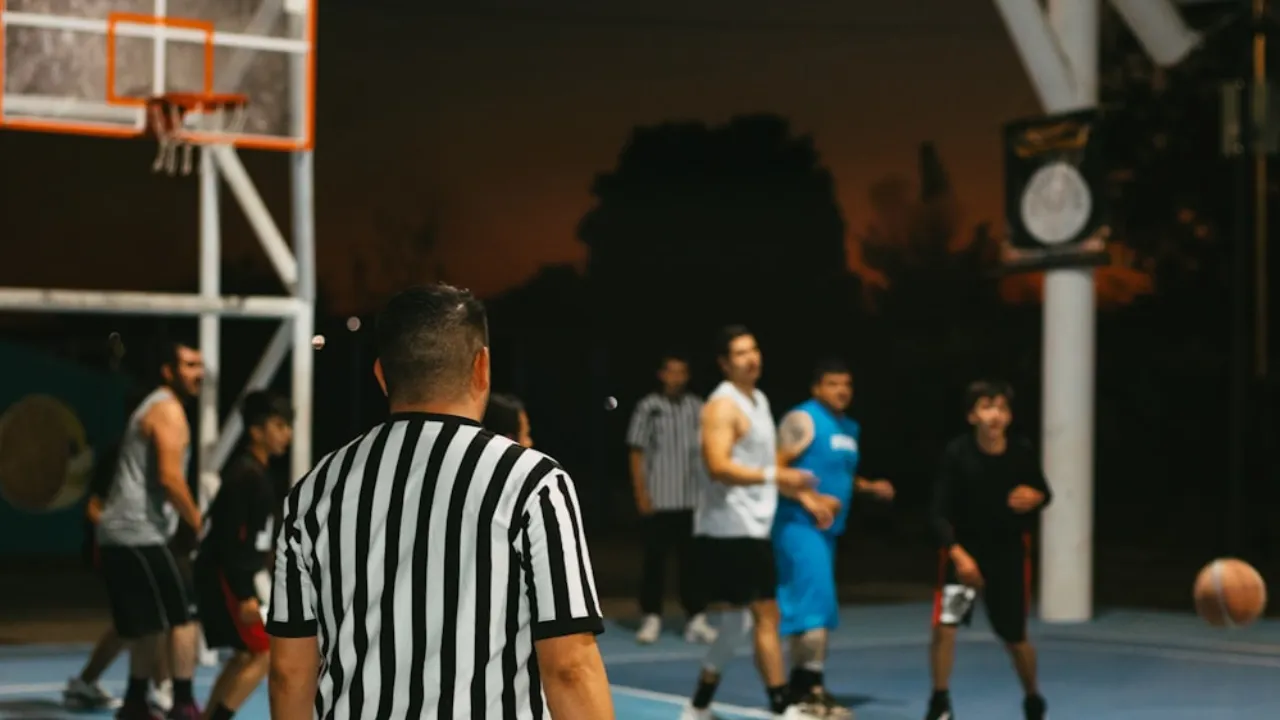
Refereeing mistakes and scandals have shaped NBA results, fan trust, and league policy for decades. This guide explains the most serious types of officiating failures—from missed calls and replay errors to outright corruption—why they matter, and how the NBA has responded. If you want to understand how and why referees sometimes “ruin” games, what protections exist, and what to watch for in controversial situations, this article lays it out clearly and practically.
Why referee mistakes matter
Officiating decisions affect more than a single possession. A blown call can change momentum, alter playoff series, influence coaching decisions, and even determine championships. Mistakes become especially consequential when they happen in the final minutes, during playoffs, or when one team receives a disproportionate number of free throws or possession advantages.
Common categories of high-impact officiating failures
- Missed calls: Failure to call an obvious foul, travel, or out-of-bounds decision at a critical moment.
- Incorrect review outcomes: Replay or review that either misses the correct call or overturns a correct on-court decision.
- Inconsistent enforcement: Different treatment of the same action within a game or across games, often perceived as bias.
- Disproportionate free throw disparity: One team gets significantly more free throws in a short span, raising fairness concerns.
- Unwarranted ejections and technical fouls: Officials removing players or coaches for actions that appear minor or inconsistent with precedent.
- Corruption or gambling: The rare but catastrophic cases where a referee’s integrity is compromised intentionally.
Notorious examples and what made them controversial
The following summaries focus on the nature of the controversy and the lessons that followed. They avoid sensational language while highlighting real consequences.
Tim Donaghy gambling scandal
One of the most damaging officiating scandals in NBA history involved a referee who bet on games and admitted to wagering on contests he officiated. The case led to criminal charges, prison time for the official involved, a major FBI investigation, and permanent damage to public trust. The scandal forced the league to tighten monitoring of referee activity and improve transparency around officiating assignments.
2002 Western Conference Finals — Lakers vs Kings (Game 6 controversy)
A playoff game that generated intense criticism over a sharp jump in one team’s free-throw attempts in the fourth quarter compared with earlier games in the series. Fans, media, and some participants cited the disparity as suspicious and argued it materially affected the series outcome. The incident is frequently cited as an example of how officiating patterns can alter competitive balance and fuel long-term distrust.
High-profile ejections and perceived overreach (examples)
There have been several instances when referees ejected star players or coaches for conduct that many observers considered mild or inconsistent. Such ejections can swing momentum and remove key players at crucial moments. These incidents led the league to review ejection protocols and emphasize proportionality in disciplinary action.
Playoff game-changing missed calls
Missed calls in playoff games—especially in elimination scenarios—carry outsized importance. Whether it is a missed last-second foul, an incorrect out-of-bounds ruling, or a misinterpreted goaltending call, these errors often trigger formal complaints from teams and public scrutiny. Repeated high-profile errors pushed the NBA to expand replay options and to create more formal evaluation processes for officials.
Inconsistent or botched reviews
Replay is meant to reduce human error, but incorrect review outcomes or confusing replay decisions can amplify frustration. Controversy typically centers on: limited camera angles, ambiguous frames, or inconsistencies between what the on-court crew and the replay center conclude. These cases highlight the limits of replay when definitive evidence is not available.
How the NBA has tried to fix officiating problems
- Expanded replay center and review protocols: The league uses a centralized replay center and defines which plays are reviewable, especially in the final minutes.
- Coach’s challenge: Coaches receive a limited number of challenges to force replays of certain plays. The system is designed to let teams correct clear errors but also to prevent slowdowns and strategic overuse.
- Last Two Minutes reports: For many close games the NBA now publishes a report explaining calls in the final minutes to increase transparency.
- Referee evaluation and training: Officials undergo ongoing evaluation, training, and performance reviews. Consistently poor performance can lead to removal from playoff rotations or further discipline.
- Stricter off-court rules and monitoring: Measures to detect and prevent gambling or outside influence on officials have been strengthened in the wake of past scandals.
What plays are reviewable and what to watch for
Not every call can be reviewed. Understanding common reviewable elements helps clarify why some controversies persist.
- Out-of-bounds/last-touch: Replay is often used to determine who touched the ball last.
- Goaltending and basket interference: Visual evidence can determine whether a defender illegally touched the ball on a downward flight.
- Shot-clock/clock errors: Clock malfunctions or timing disputes are reviewable and can change possession or scoring outcomes.
- Clear path/flagrant foul reviews: Some flagrant and clear-path fouls can be reviewed for correctness and severity.
Limitations to keep in mind
- Replays require conclusive visual evidence. If camera angles do not show a clear frame, the call often stands.
- Some judgment calls—like whether contact materially affects a shooter—remain subjective and are rarely overturned unless obvious.
- Replay can correct many mistakes but cannot eliminate human interpretation entirely.
How officiating controversies are investigated and disciplined
When a significant officiating error or impropriety is alleged, several steps typically follow:
- Review by the league’s officiating department and the centralized replay center.
- Publication of an internal or public explanation for decisions in high-profile cases, sometimes via a Last Two Minutes report.
- Internal discipline for referees when warranted, including fines, suspension, removal from playoff assignments, or termination in severe cases.
- If criminal activity is suspected, the matter can be referred to law enforcement for investigation.
How fans and teams can respond to controversial calls
Direct remedies are limited, but there are constructive options:
- Official protest: Teams may file formal protests or complaints through league procedures if they believe a rules misapplication occurred.
- Public transparency: Fans and media pressure can prompt the league to release clarifications or reports.
- Use of coach’s challenge: Coaches can use their challenges strategically to correct critical mistakes in the moment.
- Support rule changes: Collective action by teams and the players association can lead to rule revisions and clearer standards.
Common misconceptions about refereeing
- “Refs are always biased”: While patterns can suggest bias in specific instances, most errors are human mistakes. The league’s procedural checks are intended to limit systemic bias.
- “Replay fixes everything”: Replay improves accuracy but is limited by camera angles, frame rates, and ambiguous footage.
- “All controversial calls are conspiracies”: Most controversies are the result of split-second judgment and imperfect evidence, not orchestrated outcomes.
How to evaluate a controversial call
- Was the play in the final two minutes or overtime? If yes, review options increase.
- Was there a clear camera angle showing the decisive frame (last touch, release point, foot on line)?
- Was the on-court ruling a judgment call or a rule misapplication? Judgment calls are harder to overturn.
- Did the league provide a Last Two Minutes report or official explanation? Check for follow-up.
- Are there patterns (multiple calls favoring one team) that suggest bias rather than a single error?
Officiating errors are part of sports, but the consequences are amplified in professional basketball because so much can hinge on a single play. The NBA has implemented tools—expanded replay, coach’s challenges, public reports, and stricter off-court monitoring—to reduce mistakes and restore trust. Still, limits remain: camera coverage, subjective judgment, and human fallibility mean controversies will continue. Understanding how reviews work, what can and cannot be overturned, and where to look for official explanations helps fans and teams separate correctable errors from unavoidable uncertainty.

Sam, a dedicated blogger, has immersed himself in the world of content creation for the past five years. His journey reflects a profound passion for storytelling and insightful commentary. Beyond the digital realm, Sam is a devoted NBA enthusiast, seamlessly blending his love for sports with his writing pursuits.