
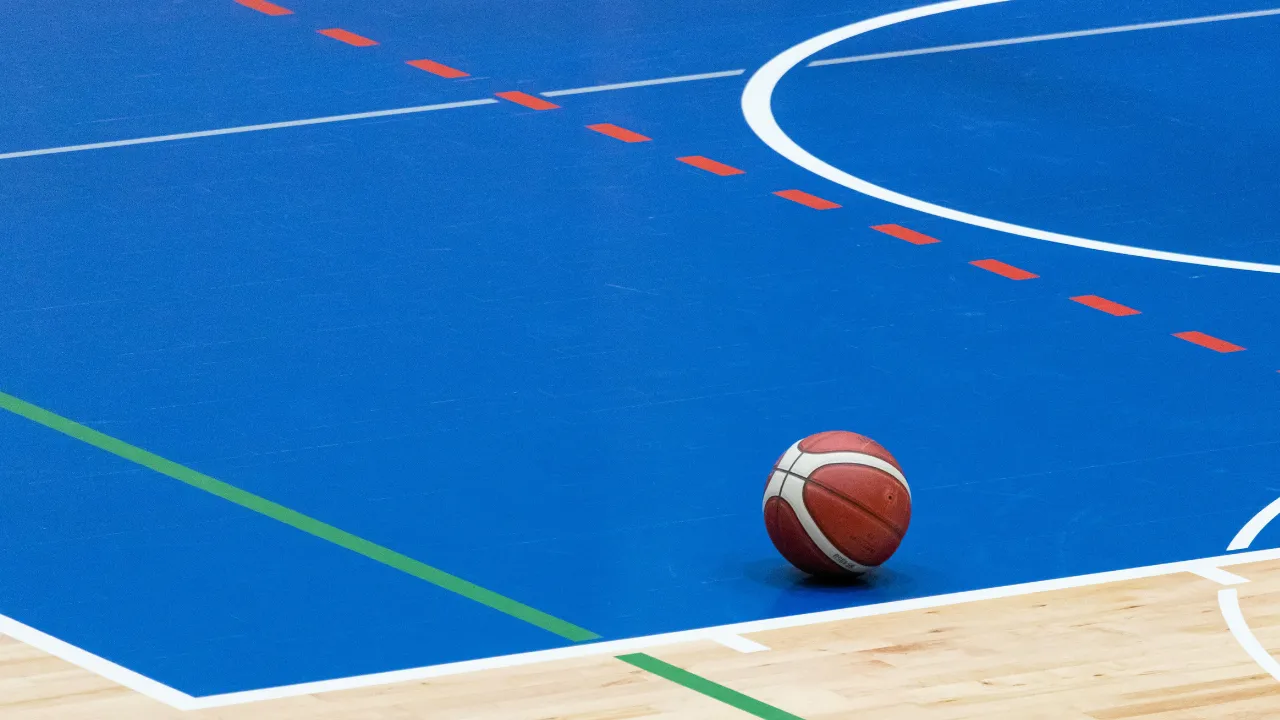
A standard NBA half court measures 50 feet wide by 47 feet long from baseline to half-court line. High school versions shrink to 50 feet wide by 42 feet long, perfect for backyard setups or school gyms.
Why Half Courts Rule Casual Play
Half courts cut the full 94-foot NBA beast in two, making games faster and less tiring—think 3-on-3 or 1-on-1 without sprinting end-to-end forever. They’re everywhere now: parks in LA, backyards in Texas suburbs, even beach setups in Miami where space stays tight. Full courts demand huge arenas, but half ones fit urban spots like NYC rooftops or Phoenix community centers, letting kids hoop without a pro budget. Geo-wise, US spots prioritize NBA specs at 50×47 feet, while FIBA international tweaks to 49×46 feet suit global streetball in Europe or Australia.
Official NBA and Pro Specs
NBA pros play on precisely 94 feet long by 50 feet wide full courts, so half splits to 47 feet deep by 50 feet across. The baseline stretches 50 feet, sidelines hit 47 feet to midcourt, with a 16-foot-wide key (paint) under the hoop. Three-point arc sits 23 feet 9 inches from center, free-throw line at 15 feet—exact for pro drills. College NCAA mirrors this at 47×50, but high school drops length to 42 feet for easier transitions, keeping width at 50. Markings stay crisp: 2-inch lines, center circle 4 feet radius, no-go zones for defenders. These sizes ensure fair play, from Staples clones in California to MSG half setups in New York.
Backyard and Custom Sizes Across Regions
Not every half court screams pro—backyards in Atlanta or Dallas often go 30×30 feet for poolsides, fitting tight lots under 1,000 square feet. Smaller gigs like 20×24 feet work for junior high in Florida suburbs or rec leagues in Colorado, scaling down to 37×42 for true mini-hoops. VersaCourt kits push 44×28 feet for portable fun, ideal for rainy Seattle driveways or sunny Arizona patios. Internationally, FIBA half courts hover 46×49 feet, common in Toronto Raptors training spots or London street courts blending US and Euro vibes. Customize baselines shorter if poles block, like 28×44 in cramped Chicago alleys—flexibility rules home games.
Key Markings That Make It Pop
Beyond raw size, lines dictate flow. The restricted arc circles 4 feet around the basket, blocking charges—vital in packed LA parks. Free-throw lane narrows to 12 feet in high school (Ohio gyms) vs. 16 in NBA (Vegas summer league), with hash marks for box-outs. Corner three-pointers arc shorter at 22 feet in college (Duke half courts), 19 feet 9 inches high school (Texas state tourneys). Paint elbows at 17 feet 9 inches guide picks—miss these, and your setup feels off. Paint ’em regulation for pickup authenticity, whether Dallas Mavericks-inspired or simple blacktop in rural Georgia.
Building Your Own Half Court Tips
Dreaming a backyard slab? Start with 50×47 feet if land allows, like spacious Midwest lots in Illinois—costs $5,000-$15,000 for concrete, hoop, lines. Shrink to 42×50 for coastal Cali hillsides or 30×30 urban Vegas edges to save cash. Use acrylic backboards (72×42 inches standard), 10-foot rims, and padded poles to mimic Oracle Arena vibes. Lighting matters—LED floods for night hoops in Florida heat. Drain slopes prevent puddles post-rain, crucial in humid Houston. Local codes vary: Florida demands 4-inch slabs, Colorado frost lines dig deeper. Add VersaTiles for cheap, movable floors in apartments from Seattle to Miami—1,200 square feet covers most.
Why Size Impacts Your Game
Bigger half courts (47×50) train full speed like Warriors drills in the Bay Area, building stamina for transitions. Tiny 20×24 rigs sharpen handles for streetball kings in Brooklyn parks, forcing quick shots. Wrong scale kills flow—too narrow cramps drives, too short skips spacing. US pros stick NBA dims for edge, but global FIBA tweaks foster team play in tighter Sydney venues. Test with tape before pouring: pace 50 feet wide, feel the wingspan. Half courts democratize hoops—pro dreams in Detroit garages or casual hangs in Phoenix cul-de-sacs, all scalable to your spot on the map.
From NBA arenas in Boston to pop-up courts in Portland, half court size shapes every swish. Nail the dims, and your pad becomes the hood’s hotspot—no full gym needed.

Sam, a dedicated blogger, has immersed himself in the world of content creation for the past five years. His journey reflects a profound passion for storytelling and insightful commentary. Beyond the digital realm, Sam is a devoted NBA enthusiast, seamlessly blending his love for sports with his writing pursuits.