
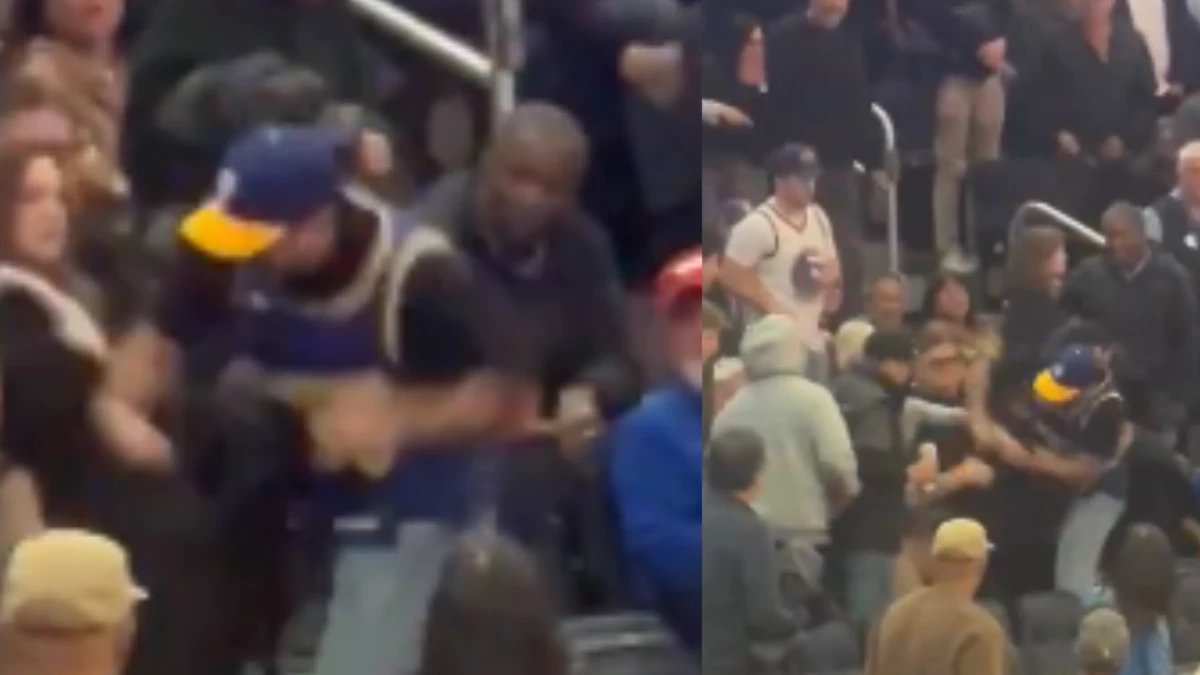
Basketball thrives on passion, but when that fire spills from the court into the stands, it leaves a bitter aftertaste. During a heated Warriors-Bucks showdown, fans traded punches instead of cheers, turning a marquee matchup into a stark reminder of how thin the line is between rivalry and recklessness. This wasn’t just a scuffle—it exposed the raw underbelly of game-day energy gone wrong.
The incident unfolded high above the hardwood, where sections of Bucks and Warriors supporters clashed in a flurry of swings and shoves. Video footage circulating online showed the melee in stark detail: bodies colliding, security rushing in, the kind of disorder that halts the arena’s pulse. According to reports, it happened amid the game’s natural tension, with both teams vying for positioning in a tight Western-East clash. No players were directly involved, but the distraction rippled through the building.
From the Warriors’ side, this hits close to home. Golden State, chasing another deep playoff run under their veteran core, relies on home-court energy—or at least the sanitized version. Locker room sources suggest players glanced up at the commotion, a brief disruption in their focus during a pivotal stretch. Steve Kerr’s squads have always preached unity, but fan antics like this test that ethos, pulling eyes away from execution on the floor. It’s the sort of thing that lingers in postgame film sessions, a subtle morale dent when the crowd turns foe.
Bucks faithful, no strangers to rowdy support in Milwaukee’s Fiserv Forum (or wherever this road tilt landed), saw their zeal backfire. Damian Lillard and Giannis Antetokounmpo feed off that noise, but a brawl drowns it out with negativity. Team insiders note these moments amplify external pressure, especially for a franchise rebuilding its contender status. Players huddle tighter after such distractions, debriefing not just X’s and O’s but the arena atmosphere they can’t control. One factor among several, sure, but it underscores why coaches harp on tuning out the noise—literally.
This wasn’t isolated chaos; it’s part of a troubling NBA trend where fan frustrations boil over. Earlier this season, similar flare-ups dotted league highlights, from taunts escalating to tussles. Warriors-Bucks amplified it—two storied franchises, star power drawing national eyes, yet the narrative shifts from threes and dunks to deckings. Security protocols kicked in swiftly here, ejecting combatants per league policy, but the damage was visual. Arenas now buzz with extra patrols, a quiet admission that passion has edges.
Zoom in on the human toll. The fans at the epicenter? Likely ejected, facing bans or fines, their night ending in regret amid flashing lights. Families in nearby seats shielded eyes, kids witnessing adults unravel. For players, it’s a gut check: they pour sweat into controlled aggression, only for spectators to mimic it wildly. Reports indicate no serious injuries, but the emotional whiplash counts. A Bucks assistant reportedly radioed down about the delay, while Warriors staff monitored from the bench, weighing if it warranted pause.
They’re throwing hands at Chase Center tonight pic.twitter.com/ffTxLGr8Gw
— warriorsworld (@warriorsworld) January 8, 2026
Why does this stick? High-stakes games like Warriors-Bucks breed intensity—Stephen Curry’s sharpshooting vs. Giannis’s dominance, playoff implications simmering. Fans invest emotionally, tickets pricey, stakes personal. But when rivalry tips to rage, it humanizes the fallout: a slammed drink, a stray elbow, seconds of poor judgment immortalized online. League memos post-incident emphasize de-escalation training for staff, hinting at broader why—rising ticket costs fueling edgier crowds, post-pandemic energy still recalibrating.
Locker room impact runs deeper than one game. Warriors veterans like Draymond Green, no stranger to ejections himself, might see parallels in unchecked emotion. Team sources suggest huddles now include “crowd awareness” nods, reinforcing mental barriers. For Bucks youngsters, it’s a lesson in professionalism amid chaos—focus inward, let security handle the stands. Coaches adjust: fewer crowd-facing celebrations, more inward hype to avoid provocation.
The NBA’s response stays measured. Statements reaffirm zero-tolerance, with reviews ongoing. No suspensions announced yet, but precedents point to multi-game bans for instigators. This keeps the focus on prevention—enhanced cameras, AI-monitored sections per recent upgrades. Players appreciate the clampdown; it protects their sanctuary, the court.
Yet the real sting is perceptual. Casual fans scrolling highlights see brawl clips first, overshadowing Curry’s 30-footers or Antetokounmpo’s posters. Discover feeds amplify it, virality favoring drama over dunks. For franchises like these, brand guardians sweat the optics—Warriors’ dynasty glow dims slightly, Bucks’ resurgence narrative frays.
In the end, this brawl resets the conversation. Arenas are extensions of the team, crowd the sixth man until they’re not. Warriors and Bucks resume grind, but with fresh scars: a reminder that basketball’s beauty fractures when boundaries blur. Next whistle, eyes stay glued to the game—hoping the stands follow suit.

Sam, a dedicated blogger, has immersed himself in the world of content creation for the past five years. His journey reflects a profound passion for storytelling and insightful commentary. Beyond the digital realm, Sam is a devoted NBA enthusiast, seamlessly blending his love for sports with his writing pursuits.